May 30:
In the morning, we did another trip around Wrocław, including many beautiful buildings, the Love Bridge, and the University. We walked around the square for a time (including a trip to the local E Wedel for chocolate and a quick lunch), and then took a ride to Ksiaŋz Castle. The castle was built over centuries by the noble family of the region… but during World War II, it was seized, first by the Nazis, who were rebuilding it as a palace and bunker for Hitler, and then by the Russians. Almost all of the furnishings were stolen, and much of the building itself was destroyed, sometimes by new construction, and sometimes by simple vandalism. While the exterior and gardens are still amazing, the interior tour was a bit sad. I got pictures of a few of the best parts.


The structure reminds me of the Biltmore Mansion in Asheville: huge and gorgeous, but clearly a show of wealth and power, and for every person who lived like this, there were thousands of others living in shacks.
Then to the Peace Church in Świdnica. Built after the Thirty Years War in 1648, it is a Lutheran church, built by permission of the Catholics, who imposed restrictions: it could only be built of wood and earth (not stone), and the structure had to be completed in a year. The construction was completed in post-and-beam, wattle-and-daub, like every Tudor house in England. It his stood for almost 400 years. It’s a typical structure of its type on the outside; on the inside, it is filled with decoration, gilding, painting, and two organs.


We had dinner at a restaurant run by the son of the minister, and took the bus back to the Wrocław hotel.
May 31
Mostly a long day on the bus. We went a few hours to Torùn, birthplace of Copernicus. They have (of course) a statue of Copernicus, with the motto, “TERRAE MOTOR SOLIS CAELIQUE STATOR” (roughly, “he made the Earth to move, and the Sun and the sky to stay still”). Torùn is beautiful, with much of the city walls intact, buildings old and new in the square (including a Victorian-era post office and guild-office rebuild, both made to look like brick baroque), and statues whimsical and serious. Torùn is also known for gingerbread; we got some, but the chocolate at the E Wedel we stopped at was better.


Above: the tower IS leaning; there's a ground-subsidence issue due to the ground clay drying out in several cities we visited.

Then back on the bus to Gdańsk. When the Germans had it, they called it Danzig; it’s a port on the Baltic, and, as such, of huge strategic importance. It’s changed hands more times than the queen in a game of Old Maid. We took a boat ride on an imitation pirate ship (on the Vistula river? Really?), and then stopped while the guide gave us some WW2 history.

Some of the first shots of the war were here. The Nazis sent in a huge ship to the river, supposedly in tribute, which then opened fire on the five guardhouses protecting the harbor. A force of 180 men were outnumbered almost 20 to one between the ship and land forces; the Poles had small arms and a mortar that fired three-inch shells; the Nazis had a battleship with four cannon that shot eight-inch shells. The small garrison at the guardhouses got the order to hold off the Nazis for thirty-six hours so that naval vessels in a nearby city could get away to Britain. After six days, the Poles were still holding off the Nazis. Each day on the radio, the message would go out, “Westerplatte broni sieŋ jeszcze” – “Westerplatte continues to fight”. It was a huge inspiration to the Polish at the beginning of the war, and I still tear up about it as I write these words.

June 1:
In the morning, to the old town in Gdańsk. TEW has decided she LOVES Gdańsk (and is apparently unfazed by the clear superiority of Torùn). Gdańsk has been a major port on the Baltic for over a millennium, and many of the buildings in the old town reflect this: granaries (and buildings restored to look like granaries), and one of the first clocks in Europe, with only an hour hand, visible from the sea (it’s HUGE), because the ports were only open from 10am to 6pm. There is a huge basilica here, to Mary (of course), with a (15th century?) mechanical clock inside that, at noon, has a show where scenes from the bible appear, as do representatives of the major contemporary trades. The organist plays to accompany, and takes a break for Adam and Eve to strike the hour, then resumes as the figures parade off, and a figure of death takes their place as a memento mori. I didn’t get pictures of that, as the camera battery had memento mori-ed shortly before. We saw the guild hall (very ornate), and a statue to Poseidon – this is, after all, a port city.


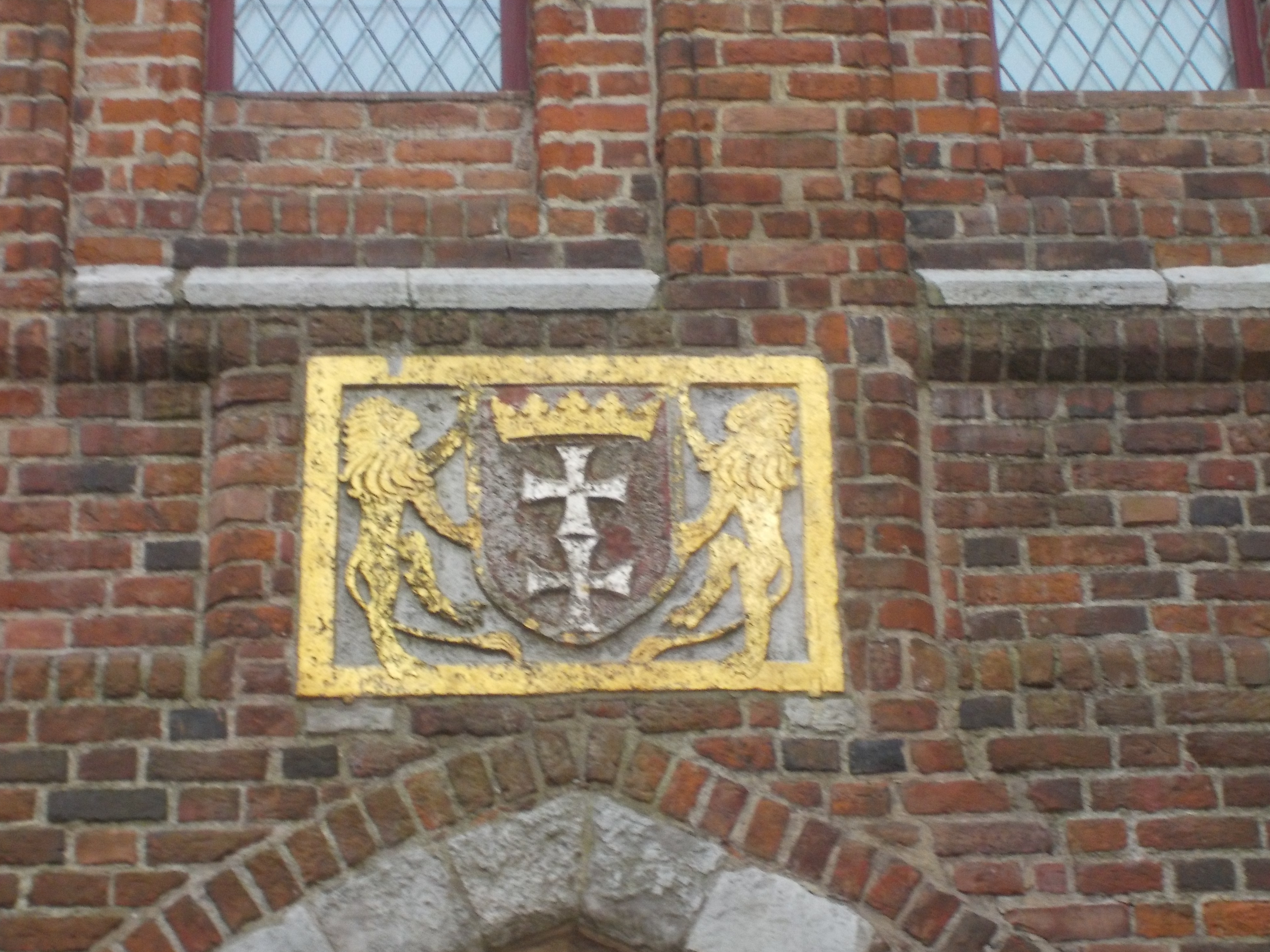


In the afternoon, to Marbork Castle. Beginning in about the 14th century, Poles began building with brick instead of stone: stone generally had to be imported, where good brick could be made of the local clay. Marbork is the largest brick fort in the world. Built by and for the Teutonic Knights, a fighting monastic order, after the Crusades were over, it was bought by the Polish king at the time (which eliminated the problem of having to take it by force; after all, the loyalties of the many mercenaries inside at the time were directly tied to whoever was providing the funds that paid them).
Marbork is in the part of Poland that went to the Germans during the partition, and they rebuilt it to their needs. Then the war came, and much was destroyed (there are pictures, but you can largely tell by the lighter color of the reconstruction bricks), and the Soviets did nothing to restore it – all of the restoration has been done since Poland achieved independence. (I’m impressed by how much time, energy, and money to Poles put into restoring their heritage, with little thought to how it would enrich individuals).


Above, what it looked like after German, and then Russian, occupation. You can see the rebuilt parts by the color of the brick.


Because it was a monastery, albeit for a fighting order, it reminded me of my seminary days: there’s a cloister to walk around as you say your daily prayers, a fancy chapel in the best part of the building, a common room where the official and political business was done (including preferred seating for the most important offices). I kept thinking, “deus, in adjutorium meum intende; domine, ad adjuvandium me festina”, “God, come to my aid, Lord, make haste to help me”, in the doggy church-Latin (with the j’s) of my 1970’s education.
June 2:
Many-hour bus ride from Gdańsk back to Warsaw, broken up by a “Be Our Guest” lunch (I think this is a Trafalgar Tours policy) at the Kwaśne Jabłko (that last word is so hard to pronounce, that even the Poles usually elide over it) farm and orchard. This is run by the cutest farming couple, deeply serious about the organic quality of their food, and sourcing locally. All of the food we were served was raised by farms within about a ten-mile radius, and they spoke eloquently (even in a second language) about the importance of multiple varieties of produce, keeping the land restored, and local eating. The unpronounceable name means “sour apples”, because they use the apples that grew “wild”, locally, to make hard cider. They say that while there are about sixteen varieties of apples sold worldwide in groceries, they have over forty on their farm, after decades of allowing apple trees to cross-pollinate. The owners were brilliant, and delightful.


Above two: I'm not generally one to Instagram my plates, but these were locally sourced and produced, and delightful.
And then in the evening to another Chopin concert, by chance at the same small hall we’d been to on the second night we were here. The pianist, another Japanese young woman, was technically flawless, but the woman we heard last week put on a better show. As we were leaving, TEW was able to get the name of the woman we’d heard last week, and may pursue the CD now.

Tomorrow, onto the plane to go home.